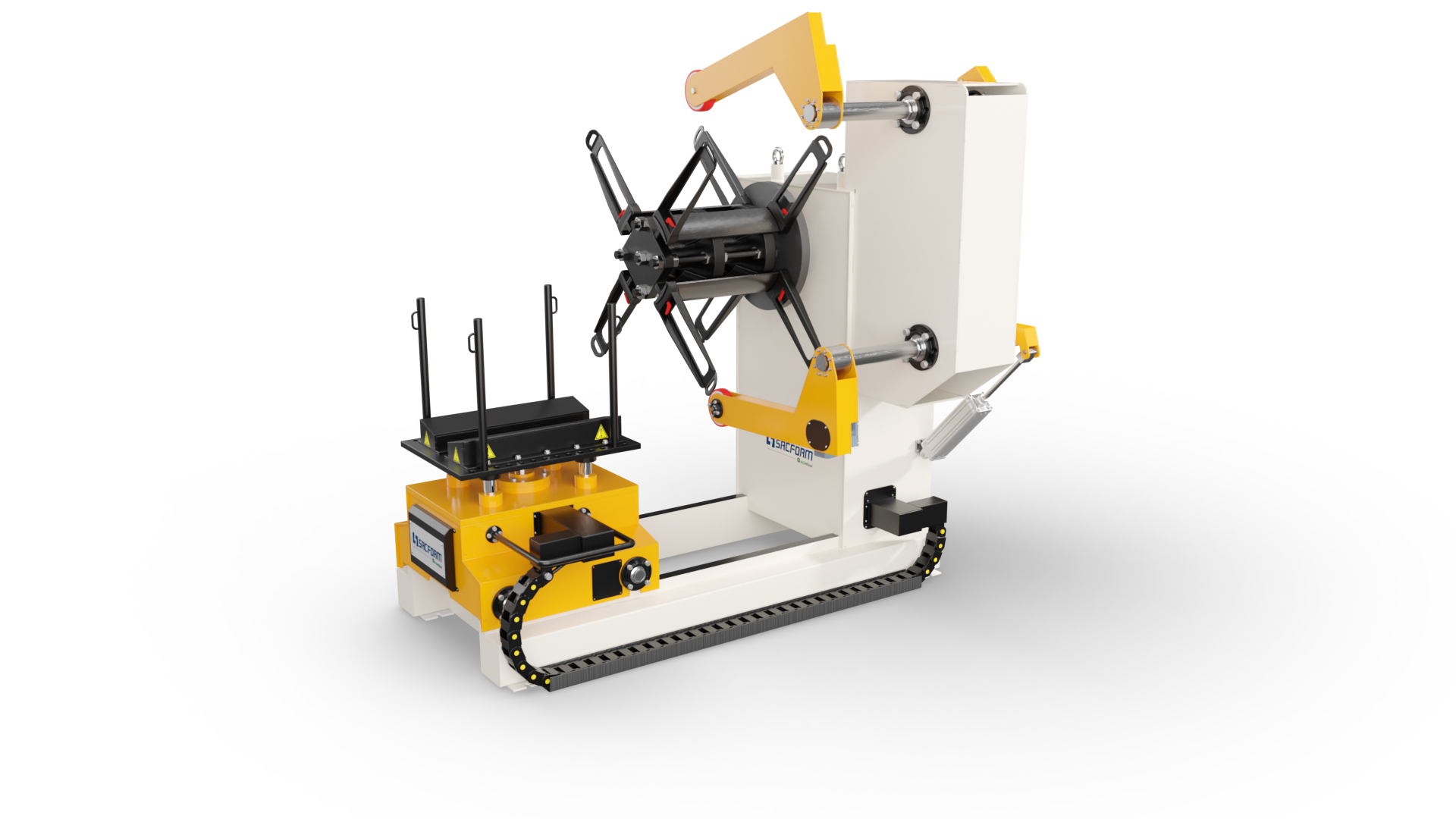
Automation in metal coil processing lines delivers unmatched speed, consistency, and precision. Advanced systems such as press feeding systems, cut-to-length lines, laminating units, roll forming lines, perforated lines, slitting lines, and compact press feeding systems make large-scale, error-free production possible.
However, even the most advanced automation cannot replace human expertise. Skilled operators remain the key to achieving maximum production quality, efficiency, and workplace safety.
Well-trained operators can detect irregularities early and take corrective actions before quality issues occur. This skill reduces scrap rates and maintains high product precision.
In high-speed press feeding, roll forming, slitting, and cut-to-length operations, experienced operators ensure automation systems run efficiently and consistently deliver high-quality output.
Automation ensures production continuity, but unexpected issues—such as material misalignment or system malfunctions—can still cause downtime.
Trained operators can quickly identify the root cause and apply effective solutions. Their expertise minimizes production interruptions, improves workflow planning, and supports overall efficiency.
Automation reduces manual work but cannot fully eliminate workplace risks. Operators trained in safety procedures, lockout/tagout (LOTO), and equipment handling play a crucial role in maintaining a safe production environment.
A well-trained workforce not only prevents accidents but also promotes a strong safety culture within the facility.
To ensure consistent improvement in quality and efficiency, manufacturers should invest in structured training programs for operators:
System Introduction and Hands-On Training
Combining theory with on-machine practice ensures operators understand both functionality and behavior under real production conditions.
Regular Performance Evaluations
Reviewing performance helps identify areas for improvement and reinforces best practices.
Continuous Education
Regular updates about new technologies, automation software, and safety standards keep operators up to date and confident in their work.
Investing in automation is crucial—but operator training is what turns automation potential into tangible results.
By combining advanced systems with skilled operators, manufacturers achieve superior production quality, higher efficiency, lower scrap rates, and a safer workplace.
This balance between human expertise and automation delivers long-term success across press feeding systems, roll forming lines, slitting lines, cut-to-length lines, and compact press feeding systems.
Your personal data is protected as a fundamental principle by AGM Line, the data controller, for visitors of the website (www.agmline.com). This Cookie Usage Policy (“Policy”) explains the types of cookies used and the conditions under which they are used for all website visitors and users.
Cookies are small text files stored on your device or network server via browsers by websites you visit.
They are generally used to offer you a personalized experience during your use of the visited website, to improve the services offered, and to enhance your experience. If you prefer not to use cookies, you can delete or block them from your browser settings. However, please note that this may affect your use of our website. Unless you change your cookie settings from your browser, we will assume that you accept the use of cookies on this site.
The data collected in cookies on websites depends on their type, and it includes information regarding your browsing and usage preferences on the device you visit the site from. This data includes pages you access, services and products you review, your preferred language option, and other preferences.
Cookies are small text files stored on your device or network server via browsers by websites you visit. These small text files, which include your preferred language and other settings, help us to remember your preferences during your next visit to the site and to make improvements in our services to enhance your experience. Thus, you can have a better and more personalized usage experience during your next visit.
The main purposes of using cookies on our website are listed below:
3.TYPES OF COOKIES USED ON OUR WEBSITE
3.1.Session Cookies
Session cookies ensure the proper functioning of the website during your visit. They are used for purposes such as ensuring the security and continuity of our sites and your visit. Session cookies are temporary cookies and are deleted when you close your browser and visit our site again, they are not permanent.
3.2.Persistent Cookies
These types of cookies are used to remember your preferences and are stored on your device via browsers. Persistent cookies remain on your device even after you close your browser or restart your computer. These cookies are stored in your browser’s subfolders until you delete them from your browser settings.
Some types of persistent cookies may be used to offer you special recommendations considering aspects such as your usage purpose of the website.
Thanks to persistent cookies, if you visit our website again with the same device, it will be checked whether there is a cookie created by our website on your device, and if there is, it will be understood that you have visited the site before and the content to be communicated to you will be determined accordingly, thus providing you with a better service.
3.3.Mandatory/Technical Cookies
These are mandatory cookies for the proper functioning of the website you visit. The purpose of these types of cookies is to provide the necessary service through ensuring the operation of the site. For example, they allow access to secure areas of the website, use its features, and navigate on it.
3.4.Analytical Cookies
These cookies collect information about the way the website is used, the frequency and number of visits, and show how visitors move around the site. The purpose of using these types of cookies is to improve the functioning of the site by increasing its performance and to determine the general direction of trends. They do not contain data that can identify visitor identities. For example, they show the number of error messages displayed or the most visited pages.
3.5.Functional Cookies
These cookies remember the choices the visitor makes within the site and provide convenience for the next visit. The purpose of these types of cookies is to provide visitors with ease of use. For example, they prevent the user from entering their password repeatedly on every page they visit on the site.
3.6.Targeting/Advertising Cookies
These cookies measure the effectiveness of the advertisements presented to visitors and calculate how many times the advertisements are displayed. The purpose of these types of cookies is to present advertisements tailored to visitors’ interests.
Similarly, they allow determining the interests of visitors based on their browsing and ensuring the presentation of relevant content. For example, they prevent the advertisement displayed to the visitor from being shown again in a short period.
4.HOW TO MANAGE COOKIE PREFERENCES?
It is sufficient to change your browser settings to change your preferences regarding the use of cookies or to block or delete cookies.
Many browsers provide options to control cookies, such as accepting or rejecting cookies, accepting only certain types of cookies, or receiving notifications from the browser when a website requests to store cookies on your device.
It is also possible to delete previously saved cookies from your browser.
If you disable or reject cookies, you may need to manually adjust some preferences, and some features and services on the website may not work properly as we cannot recognize and associate your account. You can change your browser settings by clicking the relevant link from the table below.
Google Chrome | http://www.google.com/support/chrome/bin/answer.py?hl=en&answer=95647
Internet Explorer | https://support.microsoft.com/en-us/help/17442/windows-internet-explorer-delete-manage-cookies
Mozilla Firefox | http://support.mozilla.com/en-US/kb/Cookies
Opera | http://www.opera.com/browser/tutorials/security/privacy/
Safari | https://support.apple.com/kb/ph19214?
Microsoft Edge | https://support.microsoft.com/tr-tr/help/17442/windows-internet-explorer-delete-manage-cookies
5.EFFECTIVENESS OF THE WEBSITE PRIVACY POLICY
The Website Privacy Policy is dated ………………………………….. If all or certain articles of the Policy are renewed, the effective date of the Policy will be updated. The Privacy Policy is published on the Institution’s website (www.agmline.com) and made available to relevant persons upon request.